



Helping Older People Live Well, Stay Connected and Thrive - Learning from Housing 21
23 September 2026

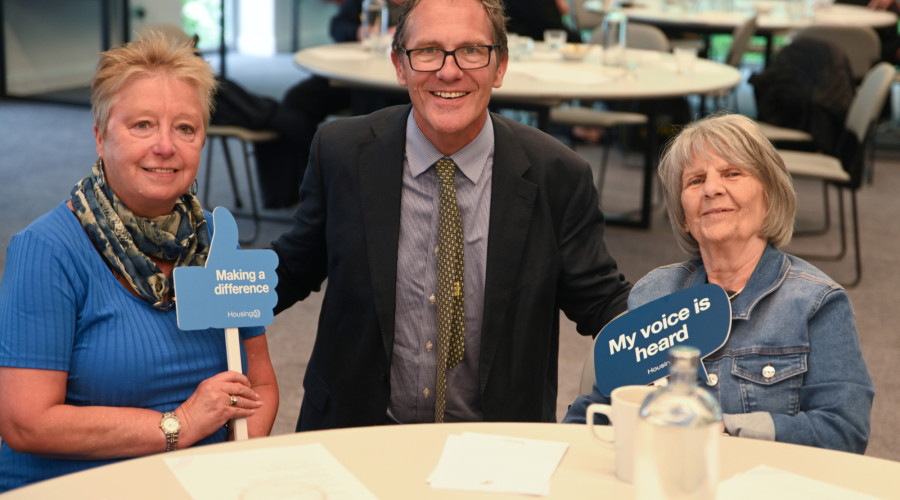
Bruce Moore is Chief Executive of Housing 21, a member that specialises in providing homes for older people. As part of our Learning Programme focus on services for younger and older residents, Bruce answers six topical questions.
1. What are the main challenges your residents face in living well in their homes and communities?
Many older people in society face a combination of challenges. These include living in unsuitable or inaccessible homes and struggling to afford the costs of housing, often combined with increasing and unpredictable health and care needs. With advances in technology more essential services are now delivered digitally, changing how people access services, communicate and stay connected. Some older people may find it difficult to adapt and navigate this digital world and risk being left behind and becoming isolated as a consequence.
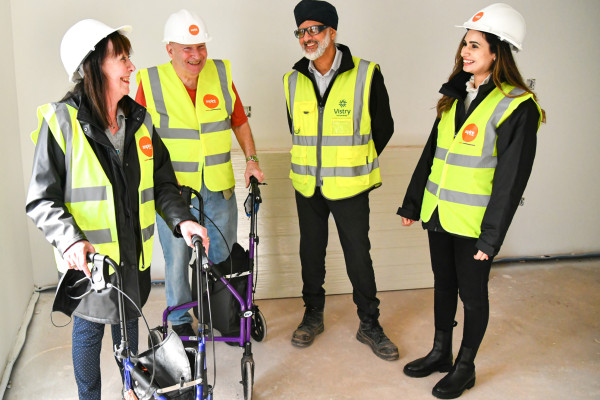
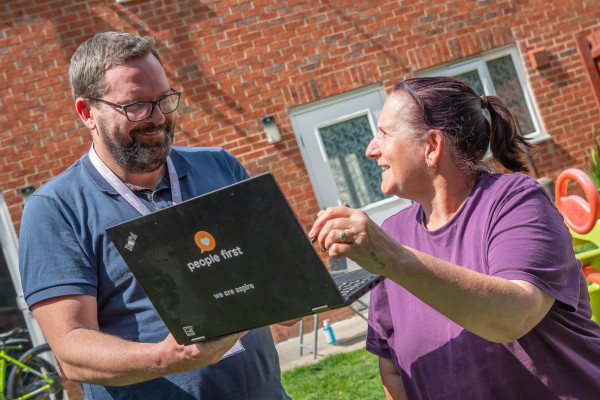
Housing 21 has a people first approach. The onsite support our scheme managers provide to those living in Housing 21 properties helps to bridge this digital divide by providing advice and guidance on how to access support and financial benefits available, which in turn helps with sustaining tenancies and enabling people to continue to live independently.
In addition to living in safe and quality homes, residents also benefit from being part of a community and many tell us that the activities and initiatives in place across our schemes, that our local managers hep to support and facilitate, bring people together and prevent the loneliness and isolation that so many people, across all generations, experience.
It is important to remember however that older people are not all the same. They have diverse needs and backgrounds and we need to ensure we respect these differences by engaging and working with our residents through local communications, choice and consensus, to ensure the services we offer meet their needs and help them to live well, with dignity and autonomy.
2. Tell us about one initiative has made a real difference to residents’ lives, and why it was successful.
Our residents continue to tell us how important having a dedicated scheme manager is to them, someone they know, trust and can talk to in person for advice and support when they need it.
Over recent years there seems to have been a shift across the wider sector to more centralised and standardised management of housing services, and away from local autonomy and devolved decision making. This seems to have been driven by regulatory compliance and cost considerations, but we understand how important that local connection and being is in control is to our residents. We remain committed to ensuring that residents at each scheme can, through their local manager, also shape their local services and determine how they should best be delivered.
That’s why, in addition to providing day-to-day support, the local managers also arrange repairs, using local contractors that often speed up the process and deliver higher satisfaction. They also lead on the lettings of properties, undertake safety checks, facilitate social activities, generally keep the scheme running smoothly and support community wellbeing. They are on hand to help and signpost residents to navigate often complex systems in order to access benefits they may be entitled to and can help with referrals to support services where needed.
Employing dedicated scheme managers and our devolved approach to service delivery is one of the core strengths of Housing 21’s service model and they are here to stay.
3. How can places and relationships, as well as services, help tackle loneliness?
We know from experience that providing the right housing has a far greater impact and benefit than simply providing someone with accommodation. The right housing can give people the security, dignity and independence they need to live well.
Once someone feels safe and supported, they will be more inclined to take part in activities and get involved, making the most of opportunities for connection. This can be with other residents within the scheme but also with local community groups and organisations.
We know that people benefit from being part of a community and being able to give back. By providing the foundations for them to do this, I hope we are enhancing the well-being of older residents but in the process also helping them to continue making a positive contribution to society. A win-win situation.
Essentially it’s about balance, recognising one size doesn’t fit all and providing different opportunities for residents to get involved, if they want to, whilst raising awareness of what is available.
4. Housing associations can’t do this alone. Which partnerships have been most valuable, and what advice would you give on building stronger local networks?
We prioritise working and engaging with other organisations, whether they are local community groups or national charities and businesses on an individual scheme basis. We use our network of local managers to reach out and build connections in their communities. They know and understand their residents and the local connections they have and are usually local to the areas themselves. Taking the time to listen and understand the needs of those you are working with, matched to what is available locally, is the key to success.
We recognise we cannot succeed on our own, which is why we encourage our teams to build connections, explore opportunities and be innovative with ideas and approaches. The best outcomes come from a genuine two-way dialogue with others to open up opportunities and see where the discussions can take us.
5. As our population ages, how do you think the role of housing associations will evolve over the next five to ten years?
An ageing population is likely to put increased pressure on health and social care, as well as the wider economy but there is a huge opportunity to raise awareness and improve understanding of the role that quality housing plays in supporting health and wellbeing. Ensuring that older people are living in appropriate housing must be viewed as part of the solution to health and social care issues and housing associations have an important role to play.
Housing associations will need to respond to increasing numbers of older people with increasing levels of age related care and support needs by continuing to build and invest in quality, general and specialist housing provision, designed with older people in mind. Building in accessibility considerations from the outset and ensuring that properties can be easily adapted to support people as they age will be essential and really should be part of building regulations. Housing associations must also continue to invest in their existing housing provision to ensure this also remains contemporary, fit for purpose and adapted when necessary to allow older people to live independently for longer.
6. If another housing association wanted to strengthen its work to support older people to live well in their communities, where would you suggest they start?
Spending time really listening and getting to understand the needs of the older people living in your properties is essential. Although older people are not a homogenous group they do face similar challenges and have similar core needs, including living in suitable housing, having access to services, support and benefits and understanding where they can go for help and support if needed.
It is incredibly rewarding to see the positive impact that living in the right home with the right support can have in enabling people to regain or maintain their independence, establish social connections and live a fuller life, with dignity as they age.
If we all recognise the importance of older people in society and work to provide them with the housing fundamentals they need the benefits could be transformational.