

What it really takes to change a place; reflections on a PlaceShapers study visit to Belfast
11 November 2026

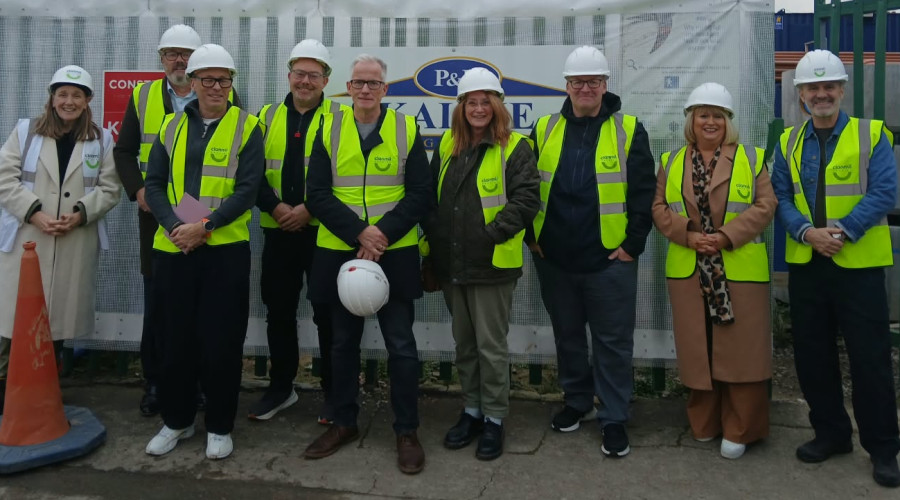
There is plenty from the past we should value and carry forward. And there are things we've lived with for far too long that we shouldn't assume have to be part of the future.
Going back to Northern Ireland always gives me a useful perspective on change. I moved away 34 years ago, so I don't experience it gradually in the way that people who live there do. I see it in snapshots. And seen like that, the scale of change can be quite striking.
A recent PlaceShapers visit to Clanmil Housing got me thinking about that, and particularly about the way the past lives on in places. Some of that history is worth holding onto. Other parts are much harder to leave behind.
At Rydalmere Street, Clanmil is bringing a former flax mill back into use to create 54 new social homes. I loved the care being taken to preserve the history and character of the building. Places like this aren't simply bricks and mortar. They hold memories. Generations of local people worked in Belfast's linen industry, and that history is still part of the communities around these buildings.
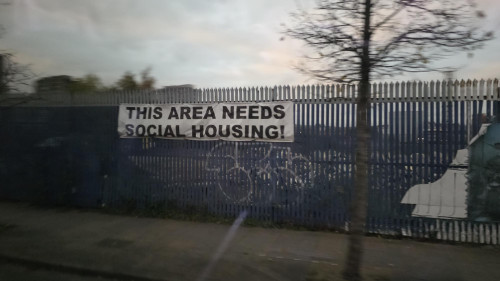
Picture taken en route to Rydalmere Street
But history leaves other marks on a place too.
At Brookfield Mill, another old linen mill has found a new purpose as homes, with people from both sides of the community living there. Just around the corner, on Flax Street, gates across the road are still closed at night, keeping neighbouring communities apart. A place bringing people together sits alongside something designed to keep them apart.
I was struck by the reactions of people in our group who were visiting Northern Ireland for the first time. Things that I had grown up with, and perhaps stopped really noticing, seemed extraordinary when seen through somebody else's eyes. It was a useful reminder that something can feel normal simply because it is familiar. That doesn't make it normal, and certainly doesn't mean it shouldn't change.
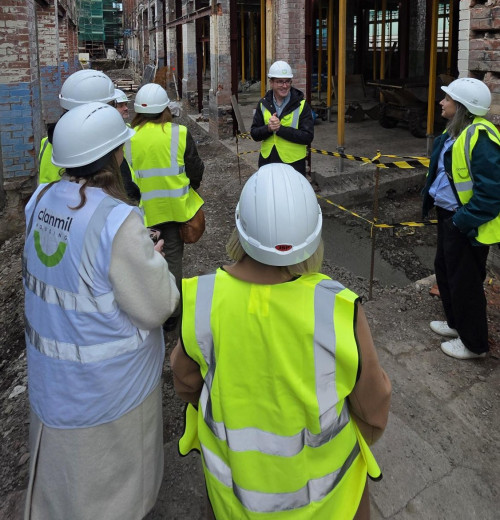
Rydalmere Street
Of course, changing buildings can only take you so far. Ultimately, changing places is about people.
That's why I kept coming back to the discussion we had with Paul Doherty, founder of the ‘Foodstock’ charity. He said you should avoid complicating things, and making assumptions about what people need. Create a space for people to come together and see what happens. “Start with a kettle and a cup of tea”, he said.
There's something wonderfully simple about that. We can spend a lot of time thinking about buildings, investment and regeneration, but a place becomes a community through the connections people make with each other.
Perhaps that's also why I came away thinking about the balance between determination and patience, particularly following a conversation with James Eyre at the Titanic Quarter. Meaningful change doesn't happen quickly. You need a clear sense of what you are trying to achieve and the determination to keep going, sometimes for a very long time. But you also need to recognise those moments when change becomes possible, and be ready to seize them.
There is plenty from the past we should value and carry forward. And there are things we've lived with for far too long that we shouldn't assume have to be part of the future.
Thank you to Carol, Jan and Gary at Clanmil for their hospitality, and to PlaceShapers for bringing us together. For me, visits like this, experiencing somewhere through other people's eyes as well as your own, are where the value of the network really shines through.