
Regeneration is not simply about replacing homes. It is about understanding what makes communities work, protecting what people already value, addressing what needs to change, and creating the conditions for existing and future communities to thrive.
What does it take to do this? Two projects, at very different stages, offer revealing insights. One is looking back at the lessons learned. The other is looking ahead to the choices that will shape its future.
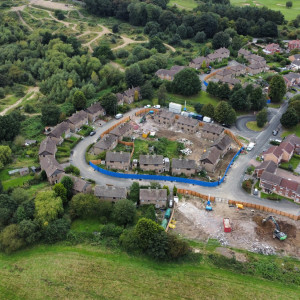
At Sugar Hill, George Niijar from Leeds Federated Housing shares insight from completing the regeneration of 70 former Coal Board homes with a story of long-term commitment to place, overcoming challenges and rebuilding community trust.
At Preston in Surrey, Ali Bennett from Raven Housing Trust looks forward as it begins an ambitious ten-year regeneration of 1,215 homes within a wider 3,000-home estate, exploring how regeneration can shape the future of an established community.
01
Avoiding mistakes on long-term regeneration projects

Nearing the end of your regeneration, what would you do differently if you were starting again?
George Niijar
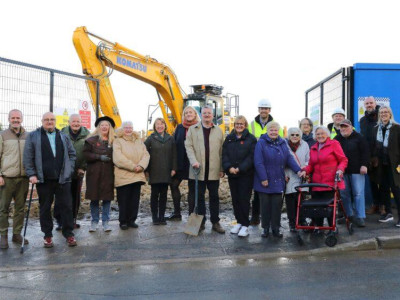 ❤️
We had never undertaken a major regeneration project, let alone one that involved residents living on the scheme whilst construction work was taking place. We decided to keep the 10 residents in their existing homes during the first phase of the demolition and build.
The benefit of this approach meant there was less upheaval and they only needed to move once, when their new homes were complete. The negative was that we had to phase demolition and construction work which added time, cost and risk to the build. It was a risky approach overall and it meant the residents had to live with the continued disruption of living directly adjacent to a construction works for several months.
Looking back, it went smoothly but we have reflected on whether this really was the best approach and whether there was viable alternative to this, such as moving residents to temporary alternative accommodation during the first phase of build.

As you embark on a ten-year regeneration programme, what do you see as your biggest challenge, and what would you most value learning from others?
Ali Bennett
I think our biggest challenge is keeping people with us over what is inevitably going to be a very long journey. Circumstances will change and there will be difficult decisions along the way. A project of this size and scale requires input from many stakeholders, not least our board and committees. Ensuring we maintain a strong governance loop throughout the lifetime of the project will be key. Ensuring board and committees have the opportunity to review and test our plans as we progress. It’s a huge investment and needs their support.
For me, the most valuable learning from others is about the things you only really know with hindsight: what you wish you had done earlier, where you underestimated the complexity, and what made the biggest difference to residents’ confidence in the programme.

02
Building trust in times of significant change
How did you rebuild trust with existing residents, and what practical actions made the biggest difference?
Georgina Niijar
Residents’ trust in their previous landlord was very low. As soon as we became custodians, we made home visits to introduce ourselves and listen to concerns. They needed time to understand our intentions for the estate, that we were creating 100% affordable housing and, although their existing homes couldn’t be saved, we would rehouse them. It was important that they were invested and involved so they could take back ownership once work was complete.
We held regular meetings to share the proposals and included the contractor and local ward members. Residents had a dedicated contacts at Leeds Federated and the contractor throughout.
We gave choices whenever possible such as deciding new street names and allocating new homes based on needs and preferences. Residents made design choices for their new home, and we undertook any necessary adaptations, as well as facilitating the full move process, covering all costs.
How are you building trust with residents from the outset, and ensuring they have a meaningful influence on decisions?
Ali Bennett
 ❤️
Trust is a pillar of our approach. It starts with honesty about what we know, what we don't know yet, and where residents genuinely have the opportunity to influence the outcome. We don't want consultation to be something we do once we've already made decisions. We want residents involved throughout, helping us understand what works, what doesn't, and what matters to them. The challenge will be maintaining that relationship throughout the project and demonstrating the difference it makes. We’ve been honest about funding too. There are things we want to do but we need external support and so some things are subject to that.
When we first told customers whose homes would be demolished, we thought really carefully about how they would hear this and feel, and how we could support them. We were really nervous about getting this right and, for me, that showed how much colleagues care, and how important these relationships are. We didn’t want this to undermine residents’ trust in us and set these relationships off on the wrong foot.
03
Creating places for existing and future communities
What have you learned about creating a place where existing and new residents feel they belong, and what one thing has made the biggest difference?
Georgina Niijar
In most new build developments, we build the homes and the community is built later but at Sugar Hill the community was already well established and was the foundation of this redevelopment.
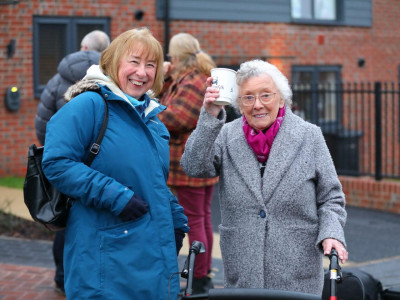
The existing residents, supported by a campaigning Save Our Homes Group, had invested everything into saving their homes and the community. When the homes couldn’t be saved, the next best thing was to save the community. A local lettings plan enabled previous residents to return to live at Sugar Hill, alongside households who had a legal right to return. As new residents moved in, the sense of community and belonging was already well established.
The biggest difference was recognising that we have facilitated the physical transformation, but it was enabled and driven throughout by the existing residents. 🥳
 ❤️
How are you identifying what residents already value about their neighbourhood, and how will you build on this to create a place where existing and new residents can thrive together?
Ali Bennett
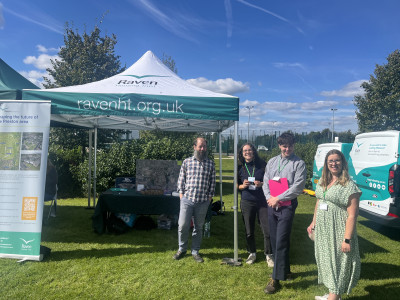
We're conscious that we're not starting with a blank sheet of paper. Preston is already a community and there are many things people value about living there, alongside things they want to change. An important part of the early work was understanding both. We’ve held a number of consultation events, the traditional room and boards alongside walking discussions around the estate, workshops with younger residents, we've had stalls at local events, set up a councillors forum - the list goes on.
Good regeneration for me isn't about replacing everything that's there, it's about protecting the things that work and using the investment to address the things that don't. Ultimately, we want the result to feel like an evolution of the community, something residents have influenced, rather than something that has been done to them.
04
Creating homes that stand the test of time
What were the most important decisions you made about the design and quality of the new homes, and what have you learned about getting those decisions right
Georgina Niijar
We inherited an existing planning approval obtained by the previous owner who had planned to redevelop new homes for market sale. So, floor areas are quite generous with additions that would appeal to the private market such as second bathrooms, spacious family kitchens and some detached homes with garages.
These additions have been beneficial in marketing our 30 shared ownership homes. Accessibility and future adaptability are important and there are several adaptable and wheelchair accessible homes. Energy efficiency for residents is a key consideration, and the homes achieve a mix of EPC A and B with solar PV. Residents report significantly lower energy bills compared to the draughty, uninsulated Airey homes. In retrospect, and if budget had allowed, we would have liked to have added solar battery storage to make the most of the solar PV.
How are you balancing the needs of existing residents with those of future generations, and what will guide your decisions about the design, quality and adaptability of the new homes?
Ali Bennett
I spent a big part of the first half of my career demolishing relatively young buildings (c30-40 years old) because they’d been designed wrong. That instils in you that you don’t want to be building those short-life properties now. You have to make the best investment choices with the available information which does mean you might make mistakes; hindsight is a wonderful thing! Having the right people involved, speaking to residents, and learning from others are a must - a benefit of PlaceShapers.
We have to solve today's problems without designing only for today. Existing residents want homes that meet their current needs, but we're making decisions about homes that should still work many decades from now. That means thinking about quality, accessibility, energy performance and adaptability, but also affordability and how homes actually work for people's everyday lives. And how we effectively maintain them. The test is whether we're creating homes we'd still be proud of in 30 or 40 years' time (not demolishing them because they are already moribund!).