



What 125 years of history at FGCH can teach us about More and Better Homes
6 July 2026

Building homes and green space, and the associated mental health benefits, don’t need to be in competition with each other.
Sometimes – often - a visit to a member reminds me that the best ideas are not always the newest ones.
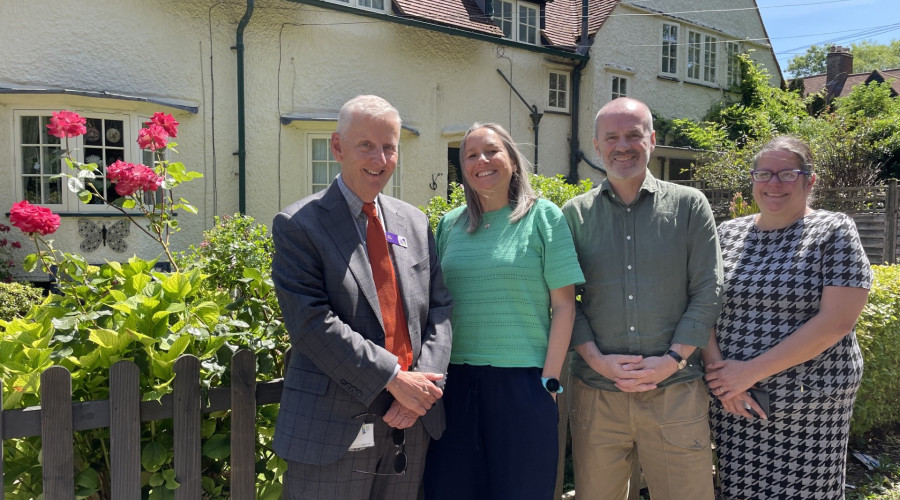
My visit to First Garden Cities Homes (FGCH) in Letchworth Garden City was certainly one of those occasions. I was fascinated to learn about the organisation's remarkable history, but equally inspired for what that history says about the challenges we face today, and the choices we need to make for the future.
A great strength of PlaceShapers is the diversity of members. Every member has its own story, and FGCH’s story is woven into the history of social housing itself.
From the moment we were welcomed by chief executive John Welch and colleagues, it was clear this is an organisation that knows its own story. The legacy of founder Ebenezer Howard — the vision of a garden city combining “the wealth of a town and the health of the country”— is still visible in both place and practice.
As industry expanded in the early twentieth century, workers needed affordable homes. Ebenezar Howard’s response was not just to build houses, but to design places where people could live well: green spaces, tree-lined streets, and neighbourhoods shaped around everyday life and wellbeing.
More than a century later, FGCH remains the custodian of much of that history. What struck me most was not only their pride in that heritage, but the way it informs their approach to the present.
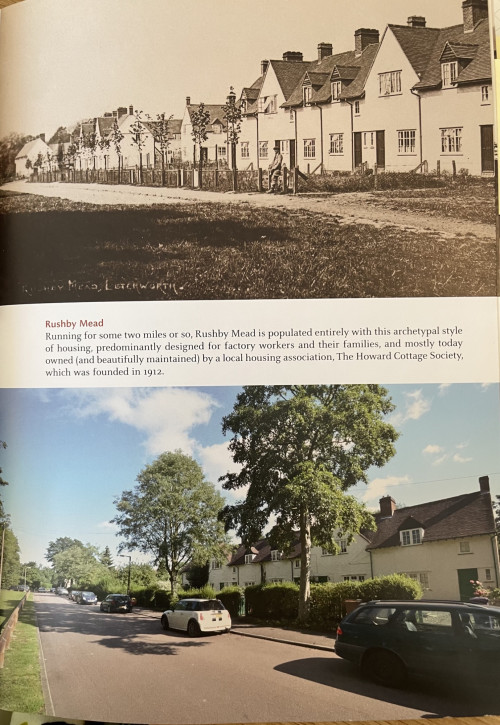
FGCH - then and now 'beautifully maintained by a local housing association'
Their central purpose remains unchanged: providing good homes in thriving communities. That means building – an impressive 1 new home for every 23 existing homes in the last year - but it also being a careful steward of distinctive homes. How, for instance, do you retrofit some of the country's oldest and most beautiful social homes while protecting what makes them special and respecting the listed building requirements and requirements of the Heritage Foundation which owns the freeholds?
On a particularly hot day, conversations about energy efficiency felt especially real. Early estimates suggested it could cost around £90,000 per home to bring some of 380 historic homes to EPC C. But through detailed understanding of homes and some innovative thinking, FGCH has potentially reduced that figure to around £20,000 per home. That is the sort of practical innovation the whole sector can learn from – and as that work is rolled out, John has offered to share the approach with members.
The organisation is equally thoughtful in responding to other challenging of 21st century living. Ebenezer Howard knew the importance of green space and FGCH continues to make this integral to its building programme. It’s a reminder that building homes and green space, and the associated mental health benefits, don’t need to be in competition with each other. Ebenezer Howard and his team of team of planners knew they were both essential and there is a lot that can teach us when designing new communities.
FGCH remains thoughtful about future demographics. Around a quarter of its 2,400 homes provide sheltered accommodation, reflecting an ageing population while also creating opportunities for people to downsize into attractive, well-designed homes, with plenty of green space.
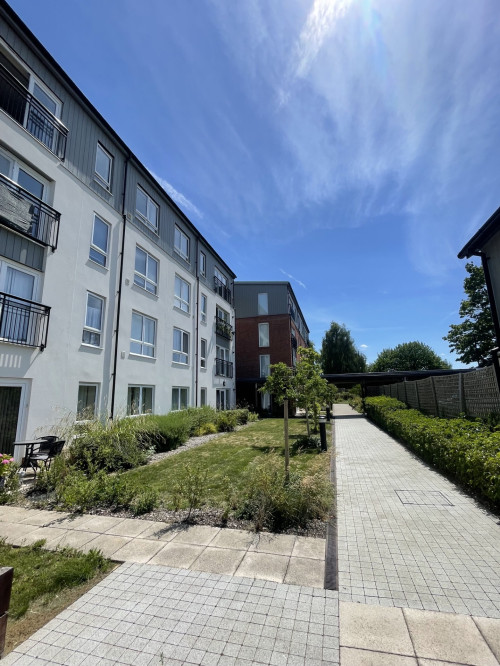
State of the art supported housing at John Coxall Court
Throughout the visit there was another consistent theme: housing is about much more than bricks and mortar. Whether through support for residents facing the cost of living crisis or the passion shown by the supported housing team led by supported housing manager Rachel Horne, the focus remains firmly on helping people to thrive, not simply giving them somewhere to live.
As PlaceShapers chair Matthew Walker, chief executive Catherine Ryder, member manager Charlotte Kay and I explored the organisation's history with John, we found ourselves repeatedly saying, "Wow." There were treasures everywhere, including the certificate recording Irish playwright George Bernard Shaw's investment (enough to pay for 16 homes) in the original organisation Howard Cottages - a reminder that bold ideas have always needed bold backing.
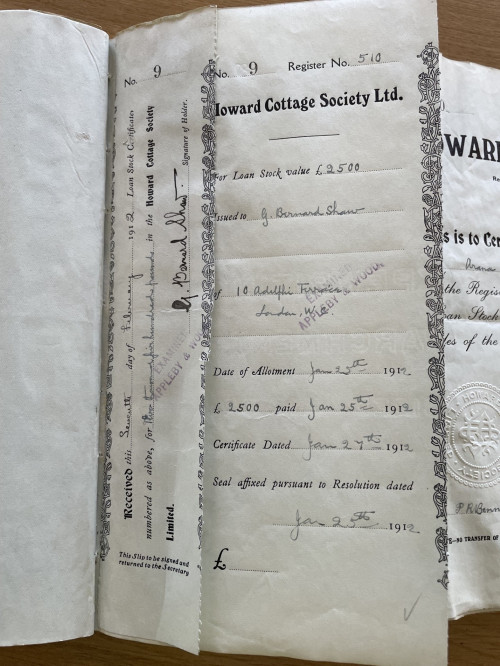
George Bernard Shaw's investment
Yet I left thinking less about the past and more about the future. Our visit came just as we prepare to respond to the Regulator of Social Housing’s “More and Better Homes” discussion document, and we will be joined at tomorrow’s Leaders’ Event in Manchester by the report author, followed by a bespoke sessions for members with the Regulator.
It feels to me that the discussion document echoes Howard's original vision rather closely.
The document says: "When delivered well, decent social housing in safe neighbourhoods protects and improves people's health and wellbeing, as well as their access to education, work and local services. This benefits people living in good social housing but it also benefits society."
Using 21st century language, this could have been envisaged by Ebenezer Howard himself. It was a good ambition in the early 1900s. It remains the right ambition today.