


Why supporting younger and older people matters: Lessons from PlaceShapers Learning Programme
13 October 2026


The best-place shaping is intergenerational: it recognises different needs without dividing people and builds neighbourhoods where a young person can imagine a future and an older person can continue to belong.
Place-shaping is about much more than bricks and mortar. It is about understanding what helps people to live well at every stage of life, and using our role as a community-based housing provider to create the conditions in which they can thrive.
Through our PlaceShapers Learning Programme, we've explored how Housing 21, Joseph Rowntree Housing Trust, Poplar HARCA and St Basils are making a difference to the lives of younger and older residents. Three lessons stood out for me and I've been reflecting on how they apply to our work at Greatwell Homes.
- 1. A good home is the foundation, but housing alone is not enough.
The PlaceShapers podcast with Tamzin Reynolds-Rosser from St Basils in Birmingham and Dan Rose from Poplar HARCA in London, explores how support for younger people can change the course of a life.
A safe home can be the platform from which everything else becomes possible. Yet moving into a first tenancy without a strong support network can be daunting. That's why we use customer insight to identify people who may be at greater risk of tenancy failure and offer enhanced, practical tenancy-sustainment support. Helping someone understand their responsibilities, manage money and ask for help early can prevent a short-term difficulty from becoming a crisis.
Dan highlights how employment opportunities can transform someone’s life. Apprenticeships give young people paid experience, recognised skills and a route into a lasting career, while bringing fresh thinking into our organisation.
We work with schools and local partners to connect young people with opportunities and to help them see that their ideas matter. At Wrenn School, for example, we helped create a sensory garden where young carers can find personal space and take part in therapeutic activity. On Greatwell Homes estates, partnership work is creating safer spaces, positive activities and a stronger voice for young residents in shaping their neighbourhoods. This shines through in a case study from Joseph Rowntree Housing Trust who share how a new resident-led approach to delivering a play area service has created an opportunity for more services for young people.
- 2. Design for ageing from the outset, rather than responding when needs become urgent.
At the other end of the age spectrum, Bruce Moore, the chief executive of Housing 21, shares valuable insights through a PlaceShapers Q&A into helping older people live well, stay connected and thrive.
North Northamptonshire, where Greatwell Homes is based, is seeing its fastest population growth among people aged 65 and over. This will increase demand for accessible homes, opportunities to downsize and specialist housing that enables people to remain part of their community.
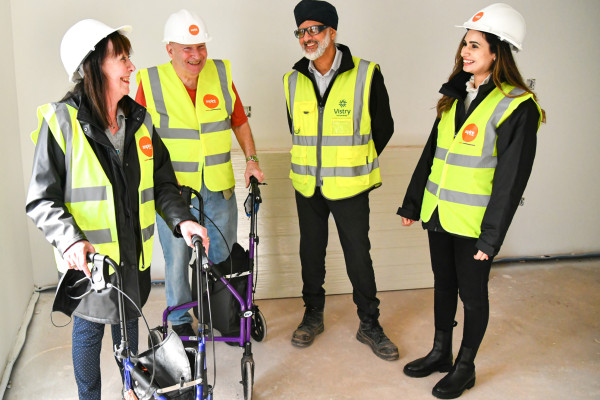
Our independent living services already help customers maintain choice and control, but we know the offer must continue to evolve as needs and expectations change. Dappletree Court is a clear expression of that commitment. Our first Independent Living Plus scheme will provide 57 homes for people aged 55 and over, combining a private front door with accessible design, communal spaces, on-site support and opportunities for wellbeing and social connection. It responds to a shortage of this type of accommodation locally and offers an alternative that supports independence and quality of life. It will also help release some under-occupied family homes, showing how the right later-living choices can benefit the wider housing system.
We are also thinking differently about adaptations. Our work with Invisible Creations demonstrates that accessible features do not need to look clinical or institutional. Good design can be attractive, inclusive and woven naturally into a home and neighbourhood. That matters because dignity is shaped not only by whether support is available, but by how it feels to use it.
- 3. Good place-shaping should work across generations, recognising different needs while creating opportunities for everyone to contribute and belong.
It can be tempting to frame investment in younger and older people as a choice. We see it differently. Strong communities depend on both. Younger people bring energy, ideas and future leadership; older people bring experience, knowledge and deep community connections. When both groups feel valued and able to participate, places become safer, more resilient and more generous.
This is at the heart of Live Greatwell+ and our vision of great communities where people live well. Our contribution is not simply to manage homes, but to listen, convene partners, invest for the long term and create opportunities that would not otherwise exist. The best-place shaping is intergenerational: it recognises different needs without dividing people and builds neighbourhoods where a young person can imagine a future and an older person can continue to belong.
I’ve taken a lot from the PlaceShapers Learning Programme and hope you do too. Next up we’re looking at regenerating homes for new and existing communities.